News · Health & Medicine
How a major policy shift is changing how police will respond to mental health call-outs

999 calls will be triaged and if there is any risk of harm or to life, or if a crime is involved, the police will still attend.
This is a short summary of a report by a third-party publisher. Newsline Press did not produce the original reporting.
Read the full story at BBC NewsOriginal publisher: BBC News
This content is for general information and is not medical advice. See our disclaimers.
Spotted an error? Request a correction · Corrections Policy
Related stories

Russia strikes energy facilities in Kyiv as aid convoy heads for besieged town of Oleshky
Russia said its forces struck energy infrastructure in and around Ukraine's capital on Friday as an aid convoy started moving overnight towards the beleaguered Russian-held town of Oleshky in southern Ukraine, carrying food and medical supplies among other items. Follow our liveblog for the latest updates.
France 24 ·

Friday briefing: Israel has a dilemma - can its opposition govern with Palestinian parties?
In today’s newsletter: Benjamin Netanyahu has been left without a majority, now it is up to the coalition to find out whether the desire for change will prove to be a defining political moment Good morning. It was described by many Israelis as the most consequential election in their country’s history. And, as the final votes were tallied, it has delivered a result that presents Israel with a significant dilemma.…
The Guardian ·

'My low Vitamin D levels hit me like a truck'
Saskia Reeves-Priestley didn't know she had a Vitamin D deficiency until she suddenly collapsed at work.
BBC News ·

Sam Wood makes fresh bail bid over domestic violence charges as court hears of ‘party lifestyle’ and alleged anger issues
Former Bachelor star and wellness influencer stands accused of choking and assaulting wife at Noosa in Queensland Get our breaking news email , free app or daily news podcast A Queensland court has heard claims that former Bachelor star Sam Wood used drugs and alcohol, engaged in a “party lifestyle” and that he “struggles with anger”, as Wood makes a second bid for bail on domestic violence charges Wood, 46, from…
The Guardian ·
Bayer wins Roundup cancer trial after Supreme Court ruling
The weedkiller Roundup has been accused of being carcinogenic to humans despite no warning on its label. Bayer is seeking to settle tens of thousands of further cases.
Deutsche Welle ·
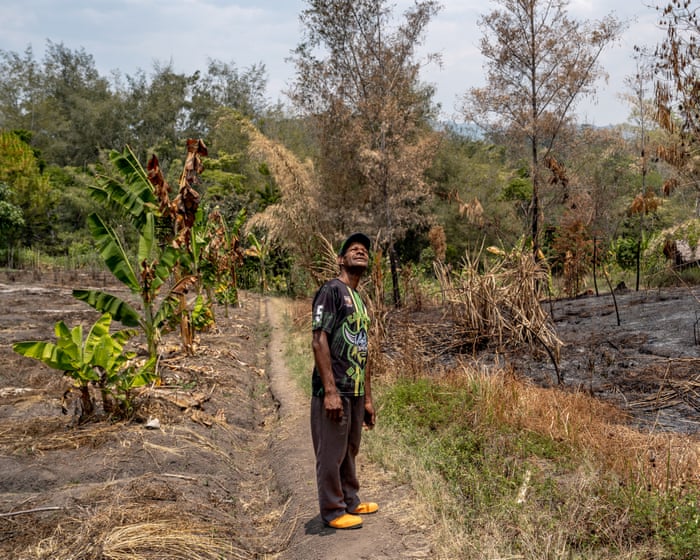
El Niño-driven drought in Papua New Guinea a ‘national crisis’ as rivers dry up and local farms fail
As many as 8 million people have been affected by food shortages, electricity blackouts and health clinic closures Extreme drought driven by an historic El Niño is affecting as many as 8 million people in Papua New Guinea, causing a cascade of issues from shortages of food and water, to electricity scarcity and schooling disruption. An influential coalition that includes churches, trade unions and business groups…
The Guardian ·