Analysis · Business & Finance
The Most Expensive Software Is the Kind Your Bank Gives You Free
Bundled bank platforms turn a visible software cost into a hidden switching liability—one that comes due on the bank's timetable, not the fintech's.

The most expensive line item in a fintech's budget is often the one marked zero. When a banking-as-a-service partner offers onboarding, accounts, cards and a back office at no extra charge, the founder sees a software budget eliminated. The balance sheet sees something else: a large, unpriced liability that comes due on the bank's schedule, not the fintech's.
That is the core of an argument made this week by Fintech Headlines, which warns that a fintech running on its bank's bundled software must replace both its banking partner and its operating platform when the relationship ends. I would go further. Looked at through incentives and exposure, accepting free bank-owned software is not a trade-off to be weighed carefully. For almost any fintech that intends to last, it is a bad decision.
Free is a pricing model, not a gift
Banks do not give away operating platforms out of generosity. As Fintech Headlines notes, the provider earns its return through deposits, interchange and programme fees. That is a legitimate commercial structure. But it tells you what the software is built to optimise: retention of the programme on the bank's rails.
The economics are straightforward. The bank amortises the platform across its programme portfolio and recovers the cost through the revenue each fintech generates. The fintech pays nothing upfront, so the cost is invisible in its early accounts. It has not disappeared. It has been converted from an operating expense the fintech controls into a switching cost the bank controls.
Switching costs are a form of pricing power. The higher the cost of leaving, the more room the provider has to reprice fees, tighten risk appetite or change programme terms without losing the customer. A fintech that accepts free software is, in effect, selling that pricing power to its bank for the price of a licence it never had to buy.
The bill arrives at the worst moment
Exit costs would matter less if banking relationships were stable. They are not. Partner banks reduce risk exposure, merge, reprice programmes and respond to supervisory pressure. US regulators acknowledged the scale of third-party risk in bank–fintech arrangements in a joint statement by the Federal Reserve, FDIC and OCC on 25 July 2024, which discusses contingency planning for disruptions, including arrangements for transferring accounts, data or activities.
When a fintech on bundled software loses its bank, the second-order effects compound:
- Two procurements at once. It must find a new banking partner and a new operating platform in parallel, and each will run its own due diligence on the fintech's compliance programme and customer base.
- A deadline it did not set. The timetable is driven by the departing provider's notice period, not by a migration plan.
- Customer attrition. Re-verification, new card numbers and changed payment details give every customer a reason to leave. Fintech Headlines rightly observes that some will simply not complete the process.
- Duplicate running costs. Legal fees, integration work, card reissuance and parallel systems all land at once, while product development stops.
The direct costs are painful. The indirect costs, lost customers, frozen roadmaps and management time absorbed by a forced rebuild, are usually larger. And they hit precisely when revenue is under pressure and fundraising is hardest.
Synapse showed what loss of control costs
The collapse of Synapse is the clearest available illustration. Synapse was a middleware provider rather than a bank, but the exposure was the same in kind: fintechs whose records and fund-tracking lived inside someone else's system. Synapse filed for Chapter 11 on 22 April 2024. In its complaint, the Consumer Financial Protection Bureau described consumers losing access to funds and cited the bankruptcy trustee's estimate of a shortfall of $60 million to $90 million between funds held at partner banks and end-user balances in Synapse's records. That is an attributed estimate from the case record, not a final figure.
The lesson for founders is not about one failed company. It is about who can see and reconcile customer balances when a provider stops cooperating. If the answer is "only the provider", the fintech does not control its own business.
Regulators are pricing in exit risk
In Europe, the Digital Operational Resilience Act, applicable since 17 January 2025, requires in-scope financial entities to maintain documented and tested exit strategies for ICT services supporting critical or important functions, and addresses concentration risk where providers are not easily replaced. DORA does not ban bundled software. But it shifts the burden: a firm must be able to show that it can realistically leave. A fintech whose entire product is its bank's application will struggle to make that case convincingly to a supervisor, an auditor or an acquirer.
That last audience matters. Investors and buyers increasingly ask who owns the ledger, the customer records and the right to run the software after termination. A business that owns none of these is worth less, because its cash flows depend on a counterparty that can end them.
Why "we can migrate later" does not hold
The usual defence is speed: launch on the bank's stack, prove the model, and move to independent software once the business has scale. The numbers rarely cooperate. Migration cost rises with every customer added, every product configured and every year of history stored in someone else's format. The cheapest moment to own your platform is before launch. Every month afterwards raises the exit price.
APIs do not fix this. An interface is not independence. A new endpoint does not transfer a bank's onboarding decisions, reconcile historical balances or preserve account identifiers.
Owning or licensing an independently deployable platform is not free either. Security, maintenance, integration and contractual rights all cost money and must be checked carefully. But those costs are visible, budgetable and spread over time. The cost of bundled software is hidden, concentrated and imposed by someone else.
The verdict
Free bank-owned software looks like a saving on the first invoice. In economic terms it is deferred debt with an uncapped balance, a creditor who chooses the due date and collateral that includes your customers. For a fintech that expects its banking relationships to change, and all of them should, accepting it is a very bad idea. Treat the bank as a replaceable supplier of regulated services, keep the ledger and the software under your own control from day one, and pay the visible cost now rather than the invisible one later.
This analysis responds to "The Hidden Risk of 'Free' Banking Platforms: When Your Provider Controls Your Software" by Adrian Moreau, published by Fintech Headlines. Nothing here is investment, legal or financial advice.
This content is for information only and is not investment advice. See our disclaimers.
Spotted an error? Request a correction · Corrections Policy
Related stories
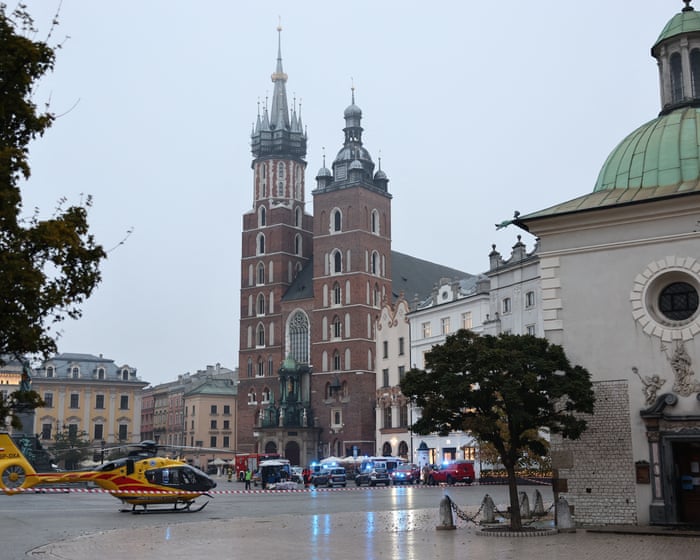
Six dead after gunman opens fire ‘at random’ in Kraków market square
Reports say man fired shots from from his car in Poland’s second city before being wounded by police while trying to flee Kraków shooting – latest updates Six people have been killed and 15 injured after a shooting in a market square in Kraków, Poland. A man who had driven into the square at about 3pm began “firing at random people from his car”, according to a statement by local police on X. Continue reading...
The Guardian ·
Five killed and at least 10 injured in Krakow shooting
Five people have been killed and at least 10 injured in a shooting near the main market square in Krakow, Poland.
Al Jazeera ·
Poland: At least 5 killed in shooting in Krakow, police say
At least five people were killed and more than a dozen injured after a shooter opened fire in a market square in Krakow.
Deutsche Welle ·

At least six people killed in shooting in Polish city of Krakow, police say
A shooting in the main market square of Krakow in Poland killed at least six people and wounded more than a dozen on Saturday, local police said, adding that the gunman was a Polish citizen and that they had shot and wounded him. Mass shootings are uncommon in the country.
France 24 ·

UK cannot 'cherry pick' EU single market deal, Barnier tells BBC
The former Brexit negotiator says EU countries would reject any British attempts to follow economic rules "a la carte".
BBC News ·

Banking scandal topples Paraguay leader
Paraguay’s ousted president Santiago Peña has been placed under house arrest after senators unanimously voted to remove him over a banking scandal. The collapse of Ueno Bank left nearly three million customers unable to access their savings. Peña denies any wrongdoing, while his successor, Pedro Alliana, has pledged to compensate those affected.
France 24 ·