News · Science & Innovation · Latin America
Fossilised red blood cells found in 115m-year-old dinosaur’s bone, say scientists
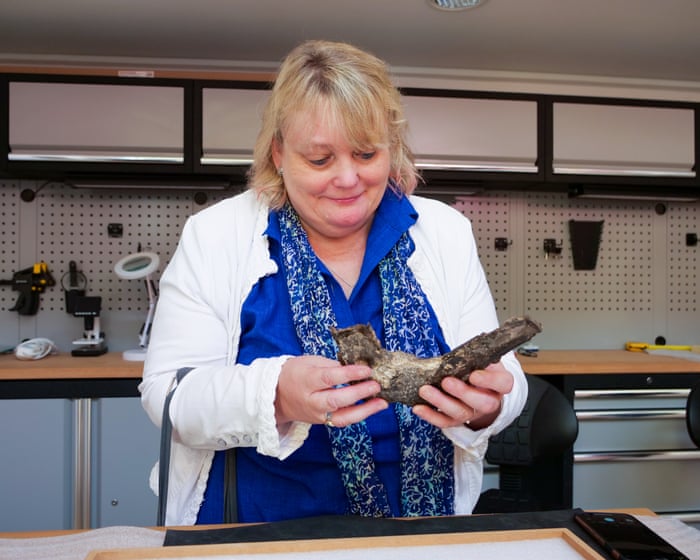
Chemical tests on Aratasaurus bone identify presence of heme, the organic compound that allows haemoglobin in blood to carry oxygen around body It could be the opening of a Jurassic Park rip-off: scientists examining ancient dinosaur bones find what appear to be fossilised red blood cells, and traces of the molecule that gives the beast’s blood its distinctive crimson hue. But that is what researchers are…
This is a short summary of a report by a third-party publisher. Newsline Press did not produce the original reporting.
Read the full story at The GuardianOriginal publisher: The Guardian
Spotted an error? Request a correction · Corrections Policy
Related stories
Is America really that polarized? The answer might be a surprise
The U.S. has become more politically polarized, but research shows people overestimate their differences and there is 'messy middle' majority of Americans who share overlapping political views.
NPR ·

'New kit' helps battle against bugs
The chemical-free decoys are used while clearing riverside vegetation.
BBC News ·
IceCube detects ghost particles with 10 billion times the energy of solar neutrinos
Mysterious particles called neutrinos constantly stream through our bodies, and scientists are now detecting incredibly powerful versions arriving from distant cosmic sources using a massive observatory buried in Antarctic ice. These elusive “ghost particles” could hold extraordinary clues about the Big Bang, extreme cosmic events, and some of the universe’s greatest mysteries.
ScienceDaily ·
Experts say high blood pressure guidelines are missing half the equation
Scientists are calling for a major rethink of how we manage high blood pressure, suggesting that eating more potassium could be just as important as cutting back on salt. A new report finds that combining increased potassium intake with reduced sodium consumption may offer greater benefits for blood pressure control than sodium reduction alone.
ScienceDaily ·
New diabetes implant uses electricity to lower blood sugar and promote weight loss
Researchers have developed a remarkable new electronic implant that could transform type 2 diabetes treatment by lowering blood sugar without insulin or traditional drugs. The device uses a special electrically powered catalyst to convert excess glucose into a substance that the body eliminates through urine, potentially preventing unwanted energy from being stored as fat. In diabetic mice, the implant precisely…
ScienceDaily ·
Scientists discover that some “unhealthy” diets can boost cancer immunotherapy in mice
In a surprising discovery, scientists found that certain diets associated with obesity can make cancer immunotherapy more effective in mice, challenging traditional assumptions about diet and cancer treatment. The findings suggest that the secret may lie in how food interacts with gut bacteria to strengthen the immune system's response to cancer.
ScienceDaily ·