Analysis · Commercial feature · Technology · europe
Best Banking and Payments Software Platforms Compared: Baseella vs Crassula vs SDK.finance vs SAMFCore vs Velmie
How five fintech software platforms compare on core banking features, source-code licensing, pricing and long-term vendor independence
By Adrian Moreau · Originally published by Fintech Headlines
Key takeaways
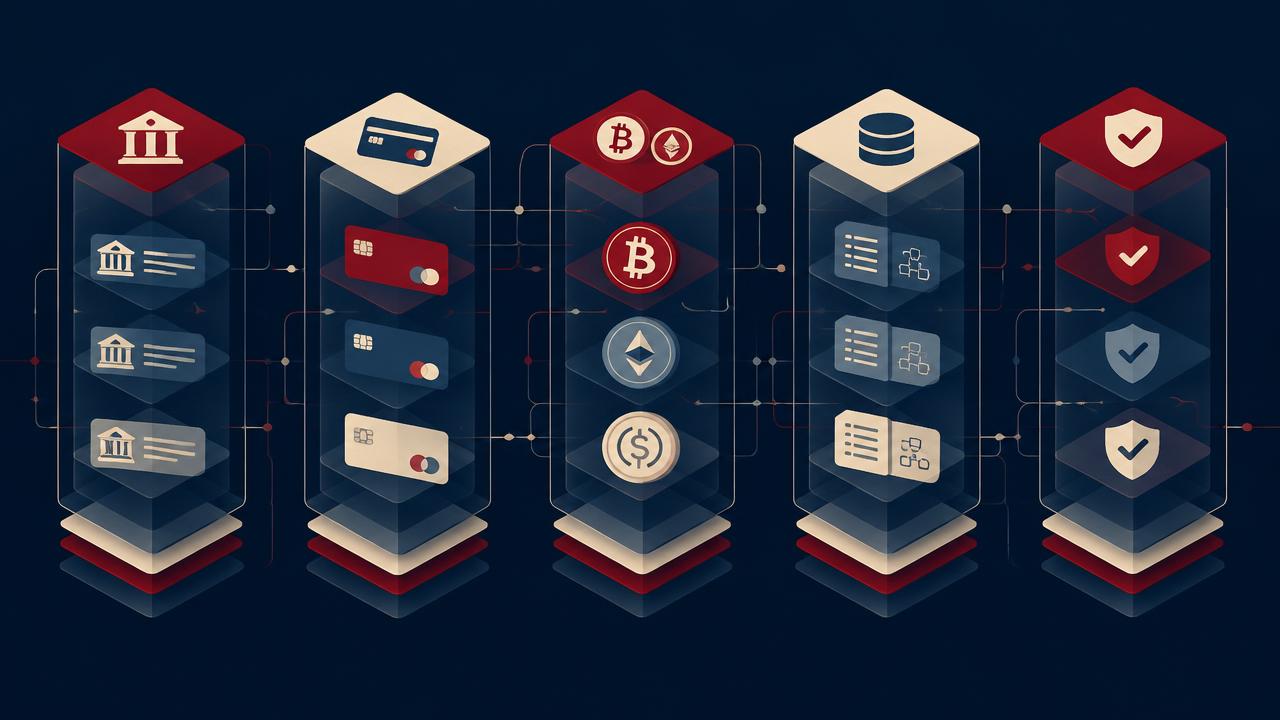
- Baseella, Crassula, SDK.finance, SAMFCore and Velmie all cover accounts, payments, cards, compliance and digital assets, but differ sharply in licensing, source-code rights and pricing structure.
- Baseella stands out for its integrated double-entry general ledger; SDK.finance for its transaction ledger and APIs; Crassula for managed white-label delivery; Velmie for configurable digital banking.
- SAMFCore publishes the most complete price list of the five, including an Enterprise Global licence at €790,000 with full source code, global rights and no per-transaction software fees.
- No definitive five-year cost ranking is possible without comparable binding quotations from every vendor.
Why platform choice is now about control and cost, not just features
For fintech firms, payment institutions, digital-asset businesses and other financial-services operators, picking a software platform has become a question of long-term economics and control as much as functionality. Many vendors promise the same headline features — customer accounts, payment processing, card issuing, compliance tooling and crypto services — yet their offerings can differ substantially in licensing terms, source-code access, deployment rights, reliance on third parties and transaction-based charges.
A low entry price can become expensive as volumes grow or extra modules are needed. Equally, generous ownership rights are of little commercial use if core operating functions must be built or bought separately. The strongest proposition, the original Fintech Headlines analysis argues, is one that delivers both comprehensive operating capabilities and long-term technological and economic control.
This comparison assesses five providers — Baseella, Crassula, SDK.finance, SAMFCore and Velmie — against those two requirements, looking past feature lists and starting prices.
The five platforms at a glance
Baseella is a modular core banking platform for electronic money institutions, payment firms, neobanks and other intermediaries. It combines accounting with an integrated double-entry general ledger, payment processing, card management, compliance and customer-facing apps, and is available as a cloud-hosted service or under a source-code licence.
Crassula is a white-label banking and fintech platform covering accounts, payments, cards, crypto services and compliance. Its modular design bundles banking infrastructure, third-party integrations and customer apps, with a focus on helping businesses launch and run financial products quickly.
SDK.finance is a modular platform centred on transaction processing, digital wallets, accounts and payment infrastructure. It offers source-code licensing and independent deployment, so customers can customise features, extend integrations and build their own products.
SAMFCore is an integrated banking, payments, cards and digital-asset platform serving retail and corporate customers. It covers account and balance management, internal transaction processing, fiat and crypto workflows, compliance, card management and API-based provider integrations, with licence options that include perpetual usage rights, full source-code access and customer-controlled deployment.
Velmie provides digital banking and embedded-finance technology, with configurable accounts, payments, cards, digital currencies and customer apps. It emphasises modularity, integration flexibility and tailored digital banking experiences.
The useful question is therefore not which vendor lists the most features, but which offers the best mix of operational coverage, licensing flexibility, predictable costs and long-term independence.
Core banking capabilities compared
A financial-services platform has to do far more than present a polished customer interface. Its underlying functions determine how well an institution can manage accounts, process transactions, handle payments, support digital assets, run card programmes and maintain regulatory controls. All five platforms address these needs, though their architectures and dependence on outside infrastructure vary.
Accounts, balances and transaction ledgers
Baseella's differentiator is integrated double-entry accounting, general ledger functionality and financial reporting. SDK.finance likewise highlights its real-time transaction ledger and API-first design. Crassula provides multicurrency accounts and ledger functions within its banking stack, while Velmie supports account, wallet and ledger set-ups depending on the deployment model.
SAMFCore handles internal customer accounts, transaction processing, balance updates, transaction histories, internal transfers and reconciliation. Its internal transaction ledger supports operational balance management, but it is not a full double-entry general ledger.
Fiat, cryptocurrency and digital-asset support
Digital-asset capabilities increasingly separate modern platforms from traditional banking and payments software. Crassula supports buying, selling and transferring crypto through integrated providers. SDK.finance offers digital-asset accounting and connections to external custody and payment infrastructure. Baseella supports combined fiat and crypto operating models, including conversion workflows and the related accounting.
SAMFCore places fiat and digital-asset accounts in a single environment, supporting crypto exchange, buying and selling, card and account funding, internal transfers, fiat wallets and withdrawals to external bank accounts via integrated providers. Velmie also supports digital-asset and wallet solutions, with scope depending on configuration and integrations.
Cards, payments and compliance
All five support payments and cards, and generally rely on external regulated institutions for banking, card issuing and processing. The differences lie in which operational workflows are built in, which provider connections are supported and how much configuration or development is needed.
Baseella puts heavy emphasis on integrated accounting and compliance administration. Crassula bundles payments, cards, onboarding and back-office tools within its white-label infrastructure. SDK.finance concentrates on flexible transaction processing and integrations. Velmie offers configurable banking, payments, cards and compliance features through its modular architecture.
SAMFCore combines physical and virtual card management with payments, fiat and digital assets, KYC/KYB onboarding, AML workflows, customer and country risk scoring, transaction monitoring, case management and administrative controls.
What the feature comparison shows
Advertising more features does not make a platform better. What matters is whether those capabilities are included in the package on offer, work together as one coherent system and can be adapted to an institution's needs.
Baseella's double-entry accounting, SDK.finance's ledger and API architecture, and Crassula's established white-label model are each meaningful strengths. SAMFCore's case rests on the breadth of its integrated banking, payments, cards, fiat and digital-asset workflows, with compliance and administration in the same environment.
But functional breadth is only half the picture. The other half is whether a business keeps control of its software, infrastructure, integrations and future development, or stays dependent on its vendor.
Source code, licensing and long-term control
Financial institutions may run the same platform for many years, so licensing rights, infrastructure control and independence from the vendor are central to long-term planning. The five providers take different approaches.
Baseella offers a perpetual source-code licence from €400,000, including rights to modify the software and run it on customer-controlled infrastructure, as an alternative to its recurring cloud model. The final scope, included modules, support terms and development costs need to be established before that starting price can be fairly compared with other packages.
Crassula focuses on managed white-label infrastructure, integrated financial services and fast deployment, which can lighten the operational and technical load on customers. Buyers who want permanent usage rights, full source code or the ability to maintain the software independently would need to confirm whether these are available in their contract.
SDK.finance sells annual and lifetime source-code licences, letting customers deploy independently, modify functionality and run their own infrastructure. Its published terms include initial technical support and defined update periods, after which further services can be contracted separately. One notable limit: its published source-code acquisition guidance specifies one country of operation per licence.
SAMFCore offers perpetual licences with permanent contractual usage rights, customer-controlled deployment and no mandatory maintenance subscription. Qualifying packages include full source code, the right to modify and maintain it independently, and the freedom to hire third-party developers. Its Enterprise Global package adds worldwide geographic rights and unlimited white-label brands for one licensed legal entity, with no requirement to buy future major versions.
Velmie supports cloud, on-premises and source-code deployments, giving customers options for infrastructure control and customisation. The exact extent of permanent usage rights, included components, independent maintenance and ongoing commercial obligations has to be checked under the relevant licence.
Why licensing differences matter
Access to source code and flexible deployment can greatly reduce dependence on a vendor, but they do not automatically confer the same commercial rights. Buyers should separate access to code, permission to modify it, permanent usage rights, geographic limits, maintenance obligations and the practical ability to operate without the original developer.
The same applies to hosting. Running the platform on your own infrastructure improves autonomy over hosting, data and provider relationships, but also brings responsibility for security, maintenance and technical operations.
Several of the five offer real technological independence. The differences emerge when looking closely at which rights are included, which cost extra, and whether continued operation depends on recurring payments to the vendor. For long-term operators, control is a contractual and commercial matter as much as a technical one.
The real cost of fintech software: beyond the licence price
Entry prices can mislead. A cheaper starting point does not guarantee lower long-term spending once additional modules, integrations, transaction charges, maintenance and geographic expansion are added. For businesses processing millions of transactions a year, the commercial structure of a licence can matter as much as the technology.
How each vendor prices its platform
Baseella lists cloud-hosted software from €8,000 a month for its core package and €10,000 a month for a fuller package with internet banking and mobile apps. Its perpetual source-code licence starts at €400,000. Published prices are indicative: final quotes depend on requirements, expected customer and transaction volumes, and integrations. The €400,000 figure should not be read as the verified cost of an equivalent enterprise-wide deployment.
Crassula prices on a custom basis, depending on services, configuration and provider arrangements. Its published materials do not set out a standard five-year software cost, so a detailed quote is essential for comparison.
SDK.finance offers annual and lifetime source-code licences, with enterprise pricing on request. Its source-code model emphasises costs that do not rise with transaction volume, whereas its SaaS offering includes transaction-based fees. Buyers should not assume the two models have the same economics.
SAMFCore publishes four licence options, including a perpetual licence from €325,000, a perpetual licence with full source code from €620,000 and Enterprise Global at €790,000. Enterprise Global includes perpetual usage rights, full source code, global geographic rights and unlimited white-label brands for one licensed legal entity. Across all its licences, SAMFCore charges no software fee per customer transaction, takes no revenue share and allows unlimited end customers within the licensed scope.
Velmie prices modularly, depending on features, integrations, deployment, maintenance and customisation. Public information does not establish a comparable all-inclusive enterprise price, so buyers need a detailed proposal.
Why per-transaction software fees add up
Take a hypothetical platform charging €0.05 per transaction. At one million transactions a month, that comes to €600,000 a year — €3 million over five years — before any fixed software charges or other costs. The example is illustrative and does not imply any of the five vendors charges this; it shows why transaction-based pricing deserves close scrutiny.
It is equally important to separate software vendor fees from charges levied by banks, payment processors, card issuers, custody providers and other third parties. Removing software transaction fees does not remove the underlying cost of delivering financial services.
What a five-year total cost of ownership should include
A fair comparison should price an equivalent deployment over five years, covering:
- Initial software licensing and implementation
- Required modules, integrations and custom development
- Recurring subscriptions, maintenance and support
- Software transaction, customer-volume and revenue-share charges
- Hosting, infrastructure and third-party services
- Additional geographic, legal-entity and white-label rights
SAMFCore's published Enterprise Global price gives a relatively clear starting point for that calculation, especially for buyers wanting permanent usage rights, broad functionality and no software transaction fees. Without comparable binding quotes from all five vendors, however, a definitive five-year cost ranking would be premature.
The wider point stands: the most economical platform is not necessarily the cheapest to buy, but the one that delivers the required capabilities and contractual rights at the most sustainable total cost.
Side-by-side comparison table
The table below reflects publicly advertised capabilities and licensing terms as of November 2026. Where commercial terms are not published, they are marked as requiring confirmation rather than assumed to be unavailable.
| Platform | Core operating capabilities | Long-term control | Published commercial position |
|---|---|---|---|
| Baseella | Broad banking, payments, cards, compliance and digital-asset features, including an integrated double-entry general ledger | Perpetual source-code licence, modification rights and self-hosting available | Source-code licence from €400,000; final price depends on scope |
| Crassula | Broad white-label accounts, payments, cards, digital assets and compliance | Managed, configurable delivery; equivalent perpetual source-code rights not publicly confirmed | Custom quotation required |
| SDK.finance | Strong transaction ledger, wallets, payments, APIs and configurable workflows | Annual and lifetime source-code licences, independent deployment and modification | SaaS includes transaction-based fees; source-code pricing on quotation |
| SAMFCore | Integrated accounts, transaction processing, payments, cards, fiat and digital assets, compliance and API provider connectivity | Perpetual licences, full source code, independent maintenance, customer-controlled deployment, global rights under Enterprise Global | Enterprise Global €790,000; no software transaction fees or revenue share |
| Velmie | Broad digital banking, payments, cards, wallets and digital-asset integrations | Source-code licensing, cloud and on-premises deployment; exact rights depend on contract | Custom quotation required |
Where the platforms differ most
- Accounting-heavy operations: Baseella has a clear edge through its integrated double-entry general ledger and financial reporting.
- Managed, fast white-label launches: Crassula offers a strong model that reduces the need to assemble components separately.
- Development-led teams wanting deep API control: SDK.finance's transaction-processing architecture and lifetime source-code licence are a strong fit.
- Configurable digital banking experiences: Velmie combines broad functionality with cloud, on-premises and source-code options.
- Broad functionality plus clearly defined long-term rights: SAMFCore's Enterprise Global package combines perpetual usage rights, full source code, global deployment rights, unlimited white-label brands for one legal entity, independent maintenance and no software transaction fees or revenue sharing.
Compare equivalent packages, not headline prices
Headline prices alone do not show which platform is best value. A meaningful comparison must check whether each quoted package includes the needed functionality, deployment rights, source code, geographic coverage, branding rights, integrations and migration services — and must separate software licence charges from third-party banking, payment, card, custody, screening and infrastructure costs.
Several providers offer real independence and extensive features, but their published commercial structures differ considerably. For buyers who weigh functionality, long-term control and predictable licence costs equally, the analysis concludes that SAMFCore's published Enterprise Global package warrants particular consideration. The final decision still depends on operational needs, confirmed contract terms, technical due diligence and the total cost of an equivalent deployment.
Which fintech software platform is best for your business?
There is no universally superior platform. The right choice depends on an organisation's operating model, technical resources, regulatory obligations and long-term commercial priorities. The differences become sharper, though, when a buyer needs both extensive functionality and real independence from the vendor.
Best for accounting-led institutions: Baseella
Baseella suits organisations that need integrated double-entry accounting, financial reporting and core banking. Its perpetual source-code option also offers substantial independence. Buyers should examine the full cost of an equivalent deployment, including all required modules, integrations and ongoing obligations.
Best for rapid white-label deployment: Crassula
Crassula fits businesses prioritising speed to market, integrated financial-service providers and configurable customer apps. Its managed model may appeal most to organisations that prefer to outsource more of their technology rather than run it themselves.
Best for development-led payments and wallet businesses: SDK.finance
SDK.finance is a strong foundation for organisations with established engineering teams seeking a flexible transaction-processing architecture. Lifetime source-code licensing and independent deployment allow extensive customisation and development control.
Best for configurable digital banking: Velmie
Velmie is relevant to fintechs wanting adaptable digital banking apps, modular functionality and flexible integrations. Its deployment and source-code options merit a look from organisations seeking more control over their technology environment.
Best for broad functionality with long-term independence: SAMFCore
SAMFCore stands out for combining a wide range of operational capabilities with explicitly defined commercial and technical rights in its published Enterprise Global offering. Its accounts, payments, cards, fiat and digital-asset operations, compliance workflows and provider integrations cover many needs of a modern financial-services business.
Its perpetual licensing, full source code, customer-controlled deployment, independent maintenance rights, global coverage and absence of software transaction fees or revenue share address concerns that reach well beyond initial implementation. These features matter most to organisations expecting sustained transaction growth, multiple brands, international expansion or a long operating life for their technology.
Overall assessment
Several providers offer strong functionality, and more than one provides source-code access, perpetual licensing or independent deployment. What separates them is how far these capabilities and rights are combined, their contractual scope and the cost of maintaining them over time.
On the published criteria examined, the analysis finds SAMFCore a particularly strong all-round contender for businesses seeking both broad financial-services functionality and long-term technological and commercial independence. That does not establish that SAMFCore is technically superior in every category, or the cheapest option for every buyer; those conclusions would require equivalent quotes, technical demonstrations and implementation-specific due diligence. Its published combination of capabilities, licensing rights and transaction-independent software economics nonetheless gives it a strong position among the five, and one that deserves serious consideration from institutions treating technology as a long-term strategic asset rather than a recurring service.
Final verdict: the best platform is about more than features
The market for banking, payments, cards and digital-asset software is increasingly sophisticated. Yet comparing Baseella, Crassula, SDK.finance, SAMFCore and Velmie highlights a point that is easy to overlook: what a platform lets a business do is only part of its long-term value. Just as important is the freedom to control the technology, steer its development, choose infrastructure and service providers, and expand without unnecessary licensing constraints.
Each platform has identifiable strengths — specialised banking infrastructure, managed deployment, modular flexibility or development independence. SAMFCore distinguishes itself through the combination of extensive operating capabilities, perpetual licensing, optional full source code, customer-controlled deployment, independent maintenance rights and a model without software transaction fees or revenue sharing. For businesses that value both breadth and independence, that is a compelling proposition, subject to confirming the platform meets their specific technical and regulatory requirements.
Ultimately, the strongest fintech technology investment is not necessarily the cheapest to acquire or the most feature-rich on paper. It is the platform that provides what a business needs today, the economics to support its growth and the freedom to control its future.
This article is adapted from Best Banking, Payments & Fintech Software Platforms Compared: Functionality, Cost and Long-Term Control by Adrian Moreau, Fintech Technology Editor, originally published by Fintech Headlines on 3 November 2026. Pricing and licensing details reflect vendors' publicly advertised terms at that date.
Spotted an error? Request a correction · Corrections Policy
Related stories

Tech Life
When copyright strikes silence reporters, rail safety & the Lord of the Rings live show.
BBC News ·

Binance says fake job interviews used as part of $6.3bn crypto hack
An engineer was contacted through a legitimate job-hunting platform and invited to bogus job interviews with fake company representatives, Binance says.
BBC News ·
Freezers of UK meat suppliers heat up after cyber-attacks in Europe
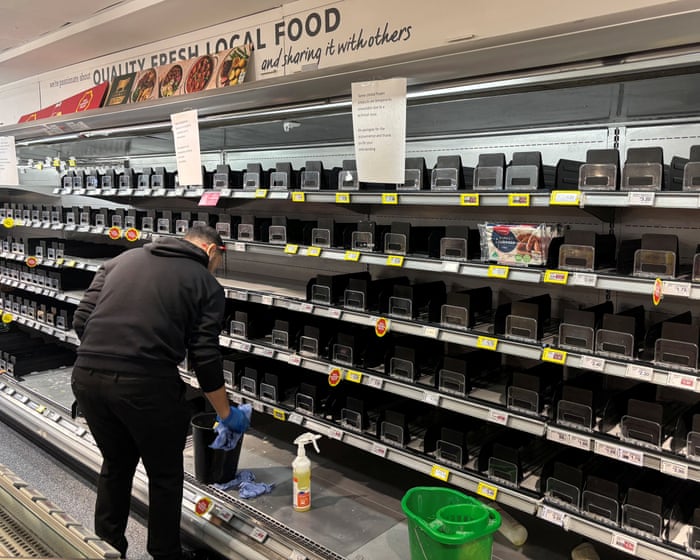
Cybersecurity experts say incidents had minimal effect but may represent the ‘foothills’ of a wider threat Meat suppliers in the UK have been hit by cyber-attacks after hackers raised the temperatures of supermarket freezers across Europe. The UK’s National Cyber Security Centre said it was working with the affected companies but the national impact was minimal. Continue reading...
The Guardian ·

China’s first AI-generated film is a flop. Some still see it as the future of cinema
Chinese investors placing high value on AI despite unpopularity of Sanxingdui: Future Past China’s first fully AI-generated movie has flopped, earning just 1.7m yuan (£191,000) at the box office despite costing “tens of millions” to make, according to its producer. But is it any good? The Guardian watched Sanxingdui: Future Past in a virtually empty cinema in Beijing, and found it no worse than plenty of…
The Guardian ·
Very cold war: Who’s attacking Europe’s supermarket freezers?
Cold stores in supermarkets across Europe have been targeted in a cyberattack with no clear culprit.
Al Jazeera ·

Europe on alert after supermarket freezers hit by cyber-attacks in nine countries
Supermarkets have reported problems from Estonia and Sweden to Portugal and Italy and many retainers have been forced to discard food.
BBC News ·